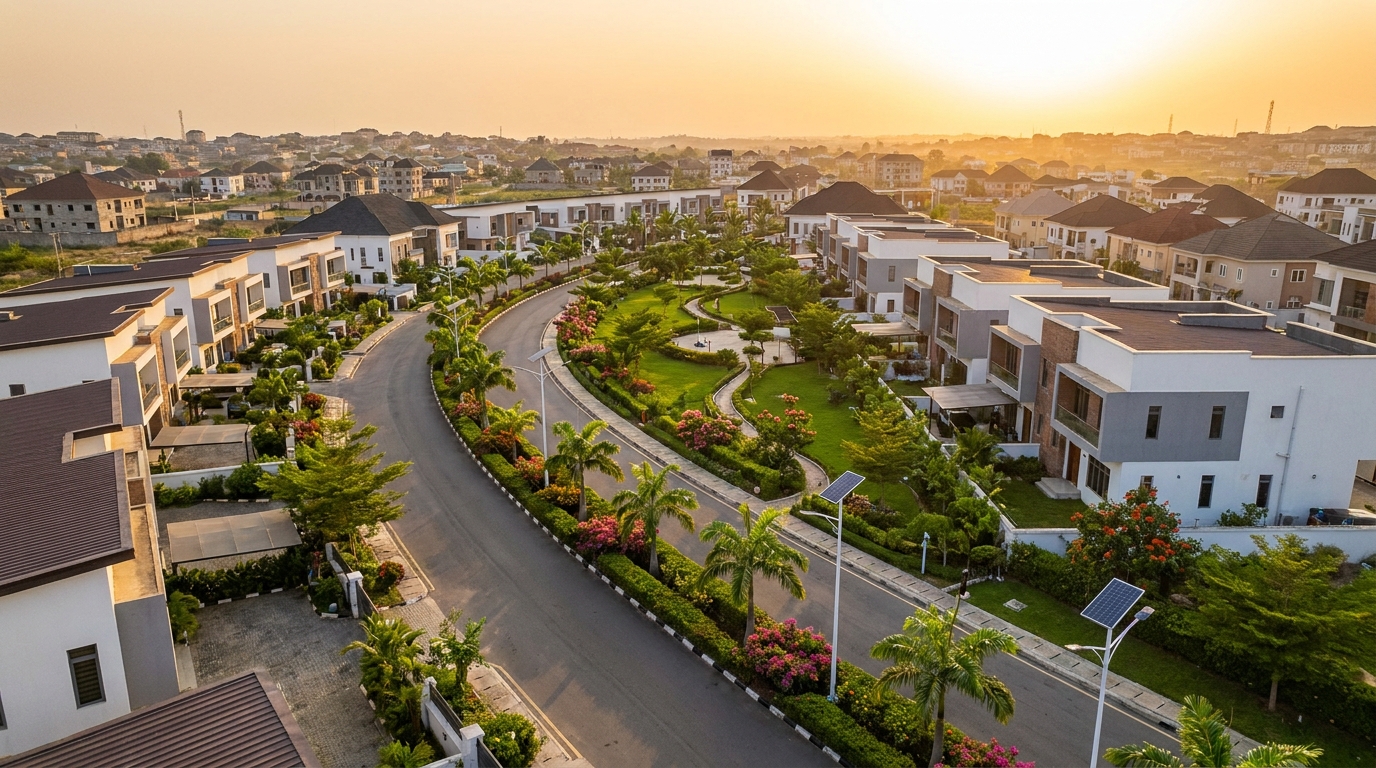
Africa's cities are growing faster than almost anywhere else on earth. Driven by a young and expanding population, accelerating urbanisation, and a wave of infrastructure investment, the continent's urban centres are reshaping themselves in ways that are hard to ignore — whether you are a Nigerian investor at home, a diaspora buyer watching from London or Houston, or simply someone who wants to understand where the next generation of emerging African real estate markets might be found.
This article is not a price forecast. We will not tell you any city will double in value, and we will not invent growth percentages. What we will do is walk through ten cities that structural analysts, urban planners and long-term investors are paying close attention to, explain the driver behind each one, name the main risk honestly, and then close with a practical framework for testing any bold claim you encounter. Think of it as a sober map, not a treasure hunt.
Why Structure Matters More Than Hype
Before the list, a word on method. When assessing next big property markets in Africa, the most durable signals tend to be demographic (a large, young, urbanising population), economic (a diversifying local economy with formal employment growth), and infrastructural (roads, ports, rail, power and digital connectivity that are funded and under construction — not merely announced). Cities that score well on all three tend to attract sustained demand for housing and commercial space over a decade-long horizon. Cities that score well on only one can still disappoint badly if the others are missing.
The Ten Cities
1. Lagos, Nigeria
Lagos remains the continent's most-watched megacity for a reason: it is home to tens of millions of people, hosts West Africa's largest port, and continues to attract corporate headquarters and financial services. The structural driver is sheer scale — demand for decent housing consistently outpaces formal supply. The main risk is macroeconomic volatility. Since the Central Bank of Nigeria moved to a floating exchange rate in June 2023, the naira has moved from roughly ₦464 to the dollar to roughly ₦1,535 by end-2024, compressing dollar-denominated purchasing power significantly for diaspora buyers and raising construction costs for developers.
2. Abuja, Nigeria
Nigeria's Federal Capital Territory continues to attract civil servants, embassies, multinational offices and a growing middle class. Satellite towns such as Lugbe, Kuje and Bwari are absorbing overspill demand as central districts become expensive. The driver is government-anchored stability and planned urban expansion. The risk is that land allocation in the FCT operates under a leasehold system governed by the Land Use Act, meaning buyers must understand the distinction between a Right of Occupancy and outright ownership — and must always confirm Governor's Consent has been obtained on any transfer.
3. Kigali, Rwanda
Kigali has built a reputation for governance, cleanliness and ease of doing business that draws regional headquarters and international conferences. Its master-planned expansion zones are well-documented. The driver is institutional credibility and a deliberate strategy to position Rwanda as a services and logistics hub. The risk is that the market is relatively small, liquidity can be thin, and foreign ownership rules require careful legal navigation.
4. Nairobi, Kenya
Nairobi is East Africa's financial capital and a major technology hub, with a large formal private sector and a well-established mortgage market by African standards. Satellite corridors along the Nairobi Expressway and towards Konza Technopolis are attracting developer interest. The driver is a diversified economy and a sizeable middle class with demonstrated appetite for formal housing. The risk is political volatility — Kenya has experienced election-related disruptions that have temporarily frozen investment decisions — and infrastructure delivery timelines that frequently slip.
5. Accra, Ghana
Accra benefits from political stability, English-language business culture and a diaspora community with strong ties to the property market. The driver is consistent demand from returning diaspora buyers and a growing services sector. The risk is currency pressure: Ghana's cedi has experienced significant depreciation in recent years, which affects construction costs and the real value of naira- or cedi-denominated returns for foreign investors.
6. Dar es Salaam, Tanzania
Tanzania's commercial capital is expanding rapidly along its coastal corridor and inland arterials. A large and young population, growing port activity and improving road infrastructure are the structural drivers. The risk is that formal title registration can be slow and complex, and foreign land ownership is restricted under Tanzanian law — investors typically access the market through long-term leases rather than freehold titles.
7. Lusaka, Zambia
Lusaka sits at a regional crossroads and has seen consistent growth in its middle-income residential market. The driver is its role as a logistics and services hub for Southern and Central Africa. The risk is commodity dependence — Zambia's economy is closely tied to copper prices, and downturns in global commodity markets have historically transmitted quickly into the local economy and property sector.
8. Addis Ababa, Ethiopia
Ethiopia's capital is one of Africa's fastest-growing cities by population and hosts the African Union headquarters, giving it a degree of diplomatic and institutional anchoring. The driver is sheer demographic momentum and a government-led condominium housing programme. The risk is significant: Ethiopia has experienced internal conflict in recent years, foreign exchange controls have been tight, and the regulatory environment for foreign investors remains complex.
9. Dakar, Senegal
Dakar is benefiting from a new international airport, a developing oil and gas sector and a government infrastructure push. The driver is the combination of natural resource revenues beginning to flow and a historically stable political environment. The risk is that resource-led booms can be uneven in their distribution, and the property market outside the premium coastal strip can be illiquid.
10. Kumasi, Ghana
Ghana's second city is often overlooked in favour of Accra, but Kumasi is a major commercial and transport hub for the interior of West Africa. The driver is its role as a trading centre with a large and growing population that is underserved by formal housing. The risk mirrors Accra's currency exposure, with the added consideration that the formal property market is less developed and title verification requires extra diligence.
How to Test Any 'Next Big City' Claim
Whenever someone tells you a city is about to boom, apply this checklist before committing capital:
- Verify the infrastructure. Is the road, rail or port project funded, contracted and under construction — or merely announced? Announced projects can take decades or never materialise.
- Check the title chain. In Nigeria, this means a survey plan, a deed of assignment or certificate of occupancy, an independent search at the State Lands Registry, and confirmation that Governor's Consent has been obtained on every transfer in the chain.
- Understand the ownership rules. Several African countries restrict foreign freehold ownership. Know whether you are buying freehold, leasehold or a right of occupancy, and what that means for resale.
- Stress-test the currency. If your income is in naira or dollars, model what happens to your effective return if the local currency weakens further. Nigeria's own experience — with headline inflation at 15.39% in August 2026 (National Bureau of Statistics), down from 23.14% a year earlier — is a reminder that inflation and exchange-rate risk are real and ongoing even in improving conditions.
- Ask who is actually buying. End-user demand (people who need homes to live in) is more durable than speculative demand. A market driven entirely by investors flipping to other investors is fragile.
- Get independent legal advice. Never rely solely on the seller's solicitor. Appoint your own.
A Note on Fractional and Remote Investing
For Nigerian investors who want exposure to property without committing to a single large purchase — or who want to start building a portfolio while still abroad — fractional ownership is worth understanding. Royal Beacon's approach to fractional property ownership is built around transparent documentation and verified title, so that investors can participate in real assets without the opacity that has historically plagued off-plan and cooperative schemes in Nigeria. Whether you are looking at a plot in Abuja's satellite towns or a residential unit in Lagos, the documentation standard should be the same: clear, searchable, and independently verifiable.
Closing Thoughts
African cities property investment towards 2035 is a genuinely interesting long-term theme — but it rewards careful, patient investors who do their homework, not those chasing headlines. The cities on this list have real structural drivers. They also have real risks. The two things are not in contradiction; they are simply the honest picture.
If you would like to explore verified, documented property opportunities in Nigeria — whether outright purchase or fractional ownership — browse our properties or speak to the Royal Beacon team. We are happy to walk you through the documentation on any listing, answer your questions without pressure, and help you make a decision that fits your actual circumstances.
This article is provided for general information purposes only and does not constitute financial, legal or investment advice. Property investment involves risk, including the risk of loss of capital. Past performance and structural trends are not a guarantee of future results. Always seek independent legal and financial advice before making any investment decision.