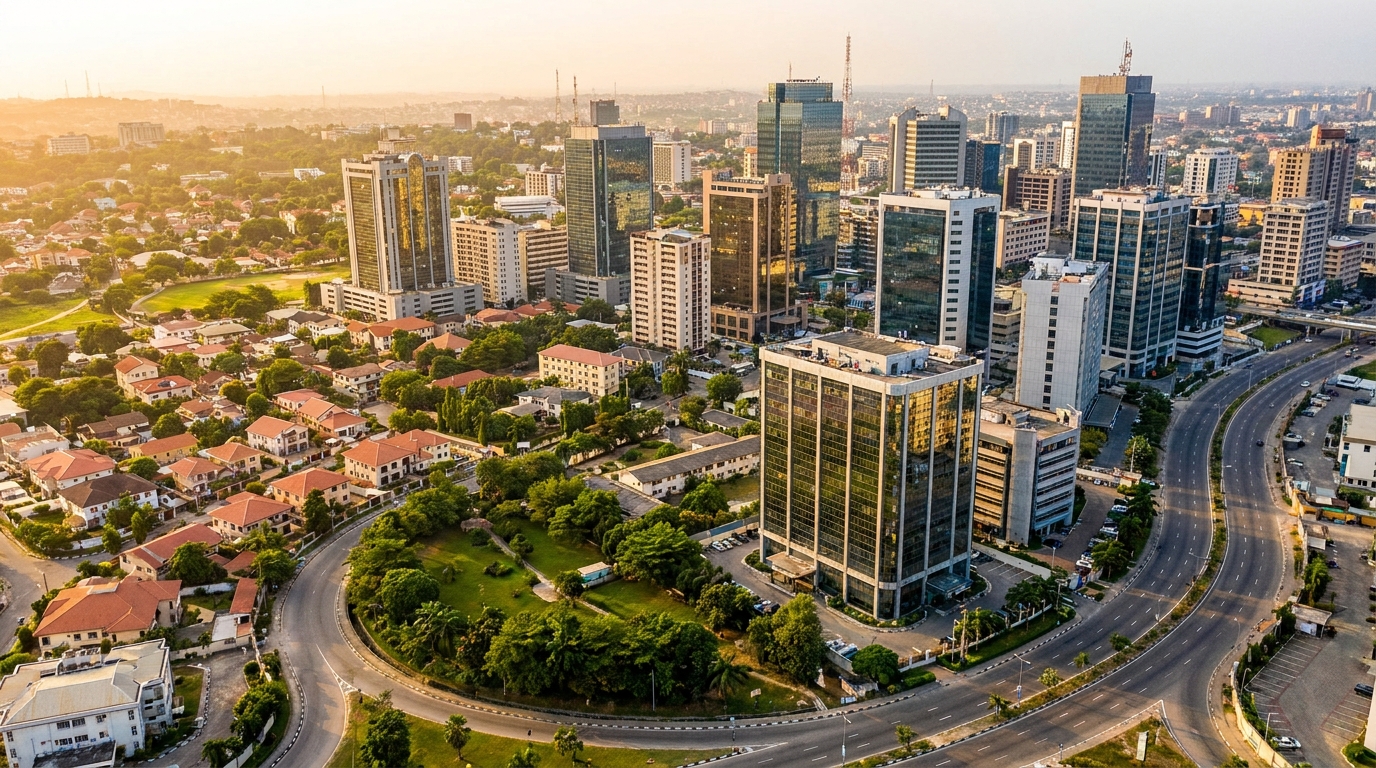
Africa is home to some of the most compelling property investment stories of the twenty-first century. A young, urbanising population, a growing middle class, and improving infrastructure are reshaping city skylines from Lagos to Nairobi. Yet the continent is not a single market — it is fifty-four distinct countries, each with its own land tenure laws, currency dynamics, title systems and foreign-ownership rules. Treating "African real estate" as one homogeneous asset class is one of the most common mistakes investors make.
This guide takes a criteria-led approach rather than a league table. For each city we consider the same set of questions: What is driving demand? How clear and enforceable are property rights? What currency and liquidity risks should you understand? And what does due diligence actually look like on the ground? Whether you are based in Lagos, London or Houston, these are the questions that matter most when you decide where to invest in African real estate.
The Framework: How to Compare African Property Markets
Before examining individual cities, it helps to agree on what "good" looks like. When evaluating any market, consider:
- Demand drivers — population growth, urbanisation, employment hubs, infrastructure spending
- Title security — how reliably can you prove and defend ownership?
- Foreign-ownership rules — can non-citizens buy freehold, leasehold only, or not at all?
- Currency risk — is the local currency stable, convertible and repatriable?
- Liquidity — how easily can you sell, and to whom?
- Transparency — are transactions registered, prices discoverable, and professionals regulated?
No city scores perfectly on every dimension. The goal is to understand the trade-offs, not to find a flawless market.
Lagos, Nigeria: Scale, Liquidity and Naira Volatility
Lagos is the commercial engine of West Africa and one of the most liquid property markets on the continent. Demand is structural: the city's population continues to grow rapidly, formal housing supply consistently falls short, and the commercial sector draws businesses that need office and retail space. For investors who understand the terrain, that gap between supply and demand is the core opportunity.
The challenge that cannot be ignored is currency. When the Central Bank of Nigeria moved to a floating exchange rate on 14 June 2023, the official rate stood at roughly ₦464 to the US dollar. By the end of 2024 it was approximately ₦1,535 to the dollar — a dramatic shift that affected the real returns of any investor whose income or exit was denominated in naira. Nigeria's headline inflation, at 15.39% for August 2026 according to the National Bureau of Statistics, has eased considerably from 23.14% a year earlier, which is encouraging — but currency and inflation risk remain part of the Lagos conversation.
Due diligence here is non-negotiable. Key steps include:
- Verifying the title document — Certificate of Occupancy (C of O), Deed of Assignment or Governor's Consent
- Obtaining a current survey plan and confirming it matches the physical boundaries
- Conducting an independent search at the relevant State Lands Registry
- Confirming Governor's Consent has been obtained for any previous transfer
Royal Beacon was built around exactly this kind of transparent, document-first process — whether you are buying outright or exploring fractional ownership of a Lagos property.
Abuja, Nigeria: Stability, Planning and the Federal Premium
Nigeria's capital offers a different proposition. Abuja is a planned city with a more orderly land administration system than Lagos, and its economy is anchored by government, diplomatic missions and the institutions that cluster around them. Demand for quality residential and commercial space from this relatively stable tenant base gives Abuja a character of its own.
Title security can be more straightforward in some districts, though the same due-diligence steps apply — registry searches, survey verification and Governor's Consent remain essential. Investors who value predictability over the frenetic pace of Lagos often find Abuja worth a closer look.
Nairobi, Kenya: East Africa's Investment Gateway
Nairobi is widely regarded as one of the most sophisticated property markets in sub-Saharan Africa. A well-developed legal framework, a functioning mortgage market, and a large diaspora with strong ties to the city all support demand. The city is also a regional headquarters for many international organisations and multinationals, which underpins commercial and serviced-apartment demand.
Foreign buyers can generally purchase property in Kenya, though leasehold rather than freehold is the more common structure available to non-citizens in certain categories. The Kenyan shilling has historically been more stable than some of its regional peers, though no African currency is immune to external shocks. Investors should take local legal advice on the specific title type and confirm registration with the relevant lands office.
Accra, Ghana: Diaspora Demand and Dollarised Transactions
Accra has become a significant destination for diaspora property investment, particularly among the African-American community and Ghanaians abroad. A relatively stable democratic environment, English-language legal system, and a government that has actively courted diaspora investors all contribute to its appeal.
A practical advantage for some investors is that many Accra transactions are priced and settled in US dollars, which reduces — though does not eliminate — currency exposure. Foreign nationals can own property in Ghana, generally on leasehold terms. The cedi has experienced periods of significant depreciation, so understanding how your rental income is denominated matters greatly.
Kigali, Rwanda: Transparency, Ease and Emerging Scale
Kigali consistently ranks highly on African governance and ease-of-doing-business measures, and its property market reflects that. The city has invested heavily in infrastructure, the land registration system is largely digitalised, and foreign investors can purchase property with relatively few restrictions.
The honest caveat is scale. Kigali is a smaller market than Lagos or Nairobi, which means liquidity — your ability to sell when you want to — is more limited. Investors who are comfortable with a longer hold horizon and who value regulatory clarity may find Kigali genuinely attractive. Those who need to be able to exit quickly should weigh that liquidity constraint carefully.
Cairo, Egypt: Size, History and Macro Complexity
Cairo is one of Africa's largest cities by population and has a long-established property market. Demand from a vast domestic population is structural, and certain segments — particularly gated communities and new urban developments — have attracted significant investment.
Egypt has experienced meaningful currency adjustments in recent years, and foreign-ownership rules can be complex, with restrictions on certain property types and locations. Repatriation of funds is a consideration that requires careful legal and financial advice before committing capital.
Johannesburg and Cape Town, South Africa: Developed Market, Developed Complexity
South Africa offers the most developed property market infrastructure on the continent — a functioning mortgage market, professional valuers, a transparent deeds registry and a liquid secondary market. Foreign buyers can generally purchase property freely.
The headwinds are equally well-documented: currency volatility, structural economic challenges, and load-shedding have all affected investor sentiment. South Africa rewards investors who take a long view and who are comfortable with rand exposure. The legal and administrative framework is robust, which at least means that what you buy is what you get.
Casablanca, Morocco: North Africa's Financial Hub
Casablanca is Morocco's commercial capital and a growing hub for pan-African financial services. The city has attracted significant foreign direct investment, and the property market benefits from that corporate demand alongside a large Moroccan diaspora. Foreign ownership is permitted, and Morocco's relatively stable currency — pegged to a basket — reduces some of the volatility found elsewhere. Investors should take local advice on repatriation rules and any sector-specific restrictions.
What This Means for Nigerian and Diaspora Investors
If you are Nigerian or part of the diaspora, your starting point matters. You may already have naira assets, family ties to specific cities, or a preference for markets where you can conduct due diligence in person. None of those factors is wrong — they are legitimate inputs into a decision that should be made carefully and with professional guidance.
A few principles apply regardless of which city you choose:
- Never skip the title search. A clean-looking property with a disputed title is a liability, not an asset.
- Understand your currency exposure before you commit, not after.
- Factor in liquidity. Ask yourself honestly: if I needed to sell in three years, who would buy this, and at what kind of discount?
- Use qualified local professionals — a lawyer, a surveyor and, where relevant, a licensed estate agent — in every market.
At Royal Beacon, we apply these same principles to every property we list, whether a full purchase or a fractional stake. Transparent documentation is not a feature — it is the foundation.
Ready to Explore?
African property investment is a genuine opportunity, but it rewards preparation. If you would like to see what is currently available, browse our properties or speak to the Royal Beacon team — we are happy to walk you through the options and the documentation, with no pressure and no shortcuts.
This article is provided for general information purposes only and does not constitute financial, legal or investment advice. Property investment involves risk, including the possible loss of capital. Readers should seek independent professional advice before making any investment decision.